Table of Contents
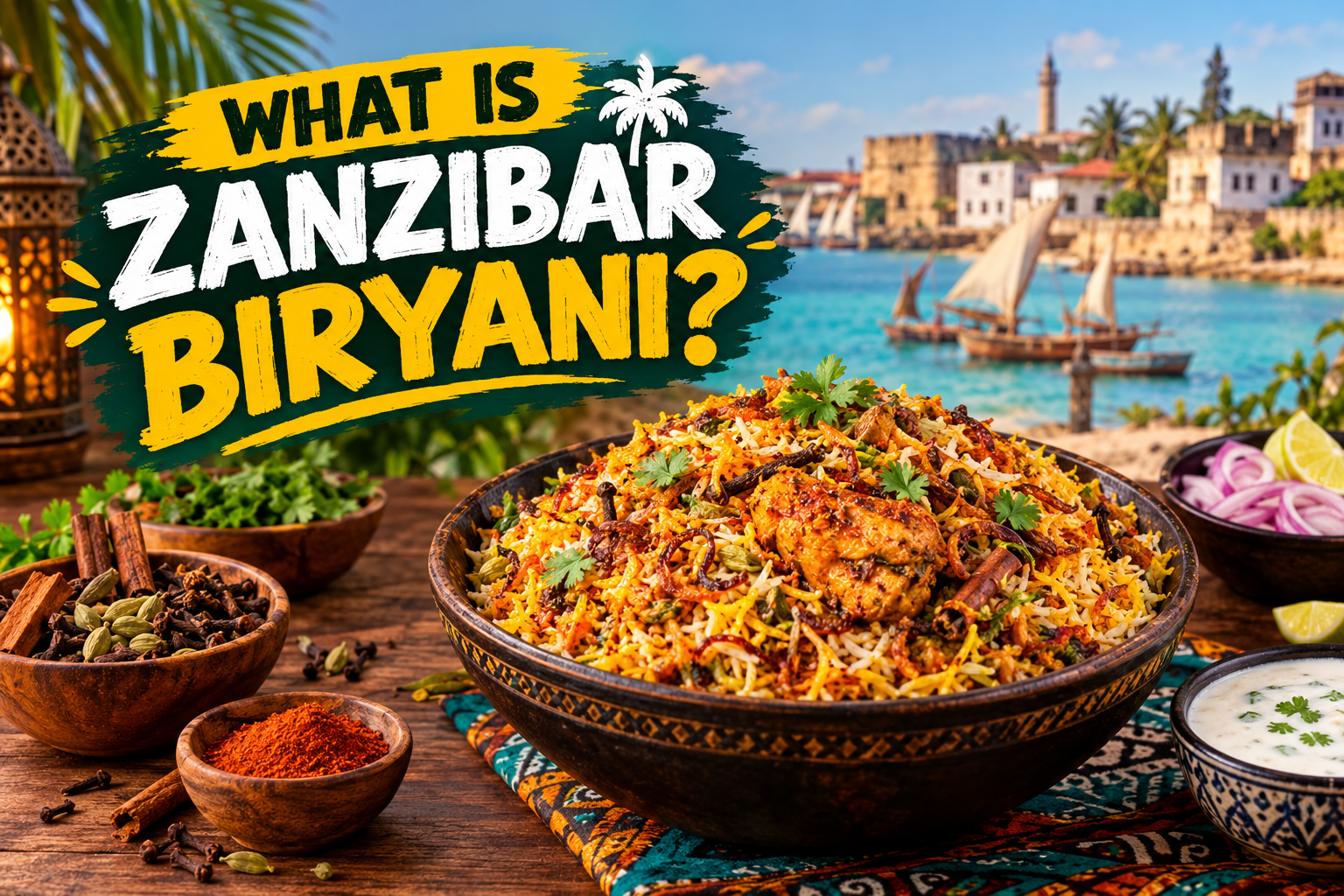
Zanzibar biryani is a traditional rice dish from Zanzibar, Tanzania, known for its rich flavour and aromatic spices. It is typically made with rice, meat such as chicken or beef, onions, tomatoes, and a blend of spices.
If you are a Karachiite, you’d find Zanzibar biryani a unique variation of the traditional biryani that you enjoy every Friday.
Main Ingredients in Traditional Zanzibar Biryani
The Rice and the Meat
Traditional Zanzibar biryani uses long-grain basmati rice and tender meat, usually chicken, beef or goat, marinated in yoghurt, ginger and garlic. The rice is parboiled separately so every grain stays whole. The meat is cooked into a thick masala before the two meet in the pot.
The Spice Mix
Cinnamon, cloves and cardamom lead the spice mix in Zanzibar biryani, backed by black pepper, cumin, turmeric and sometimes saffron.
Most of these go into the pot whole. The cinnamon stick and cloves perfume the rice water, and the ground spices go into the meat masala.
Onions, Tomatoes and Finishing Touches
Fried onions, tomatoes, ginger-garlic paste, lemon, fresh coriander, and mint round out the dish. Many cooks also add potatoes and top the pot with boiled eggs. The browned onions bring sweetness, and the herbs and lemon keep the richness from feeling heavy.
Taste and Texture Profile of Zanzibar Biryani
Warm, Aromatic and Gently Sweet
Zanzibar biryani tastes warm, aromatic and savoury, with a faint sweetness from cinnamon and clove. The meat is well seasoned, the rice carries the spices all the way through, and a squeeze of lime lifts the whole plate.
Fluffy Grains, Soft Meat and a Light Crust
The rice grains stay separate and fluffy, the meat turns soft enough to pull apart, and the base of the pot can form a light crust.
Because the rice is only partly cooked when it goes into the pot, it finishes in the masala’s moisture and takes on flavour without going mushy.
What Is the Difference Between Zanzibar Biryani and Pilau?
Layered Cooking Versus One-Pot Cooking
Zanzibar biryani is layered: the rice and a separate meat masala are cooked apart, then stacked and steamed together. Zanzibar pilau is a one-pot dish where rice cooks with meat and spices in the same stock. Biryani tastes richer and more layered, while pilau tastes more even.
Flavour and Texture
Choose pilau for a milder, everyday plate, and choose biryani when you want a richer, more complex meal. Pilau tastes even from the first bite to the last because everything cooks together. Biryani changes as you eat, since each spoonful catches a different mix of rice and masala.
What Is Usually Served With Zanzibar Biryani?
Kachumbari, Chutney and Other Classic Sides
Zanzibar biryani is usually served with kachumbari, a fresh tomato and onion salad, plus a chutney or pickle and often a yoghurt side. Many diners add a lime wedge. The salad is cold and sharp against the warm, rich rice, and the chutney adds tang.
How to Serve and Eat Authentic Zanzibari Biryani
Serve Zanzibar biryani hot on a wide plate, with kachumbari and chutney beside the rice instead of mixed in. Eat it with a spoon, or with your hand if you like. Take a bit of rice, meat, and sauce together, and squeeze lime over the top just before the first bite.
Swahili food culture leans communal, so a big shared platter in the middle of the table is the natural way to serve it. Put the salad and sauces in small bowls and let everyone build their own bite.
Is Zanzibar Biryani Spicy?
Honestly, it is more aromatic than hot. Its spices (cinnamon, clove, and cardamom) add fragrance and warmth instead of chilli heat. Any fire usually comes from a pili pili sauce served on the side, so you control it.
If you grew up on a chilli-forward Karachi biryani, you may find this one gentler and more perfumed. That suits people who want flavour without sweating through lunch, and it suits a table with mixed spice tolerance. Add hot sauce and chilli at the table if you want more kick.
When Do People Eat Zanzibar Biryani?
People generally eat Zanzibar Biryani at gatherings, festivals, lunches, and special meals.
Since biryani is a must in every gathering in Karachi, Zanzibar biryani naturally fits the culture. In Pakistan, it fits a dinner party, a weekend lunch with friends, or any night you want a proper meal without cooking one.
Funzo Foods also takes bulk tin orders in Lahore and Islamabad, so you can easily have a unique variation of biryani.
Where Can You Try Zanzibar Biryani?
Funzo Foods serves Zanzibar biryani from its Karachi kitchen, and ships sealed tin packs to Islamabad and Lahore. If you live outside Karachi, the tin-packed African food range is the way to go.
Now, at this point, you might want to have some authentic Zanzibar Biryani. Don’t you? So why not order it from Funzo Foods?
Funzo Foods is an authentic African cuisine catering service in Karachi, where you can get truly delicious Zanzibar biryani and many other dishes.
Order Zanzibar Biryani in Karachi, Lahore, and Islamabad From Funzo Foods
Funzo Foods in Karachi cooks Zanzibar biryani from traditional East African recipes with imported spices. Its Zanzibar Biryani is fragrant spiced rice layered with tender meat, and it is a bestseller on the menu.
Frequently Asked Questions
What is Zanzibar biryani?
Zanzibar biryani is a layered, aromatic rice dish from the Swahili coast of Tanzania. It combines basmati rice, marinated meat, and whole spices, steamed slowly in one pot.
What are the main ingredients in Zanzibar biryani?
Basmati rice, meat, onions, tomatoes, yoghurt, ginger, garlic, and spices such as cinnamon, cloves, cardamom, and black pepper. Potatoes and boiled eggs often finish the dish.
Is Zanzibar biryani the same as Pakistani biryani?
They share the layered method, but the spice balance differs. Zanzibar biryani leans on cinnamon, clove, and cardamom, while many Pakistani biryanis lean on chilli heat.
Can I order Zanzibar biryani in Karachi?
Yes. Funzo Foods cooks it in Karachi. Browse our menu or call or WhatsApp 0336 3010009 to place an order.
Can I get Zanzibar biryani in Islamabad or Lahore?
Yes. Funzo ships sealed tin packs across Pakistan, including Islamabad and Lahore. Delivery charges vary by location, so confirm the amount when you order.